As a healthcare leader, I have worked across clinical practice and academic health sciences.
Tina Patel Gunaldo, PhD, DPT, MHS
Working in both settings has strengthened my belief that interprofessional collaboration deserves the same rigor as every other decision that affects patient care, learning, and organizational performance.
I see collaboration as a form of prevention. When people share a purpose, understand how their roles connect, and have a structure for working together, they are better positioned to use everyone’s expertise and contribute to a shared outcome.
My work brings evidence to how teams are prepared, how cross-department projects are designed, and how collaboration is sustained across professions and settings.

What I have built my career around
and building what is needed
into practical application
sustainable outcomes
for intentional collaboration
Evidence should guide how we collaborate.
Healthcare organizations use evidence-based pathways to support consistent clinical decisions. The way people work together deserves the same intentional design.
Healthcare professionals huddle, round, communicate, and collaborate every day. Research should guide how those opportunities are structured, how teams develop, and how people contribute to a shared outcome.
An interprofessional team requires more than bringing people into the same room. Team members need a shared purpose, connected roles, mutual responsibility, and a way of working that allows each person’s expertise to influence the outcome.
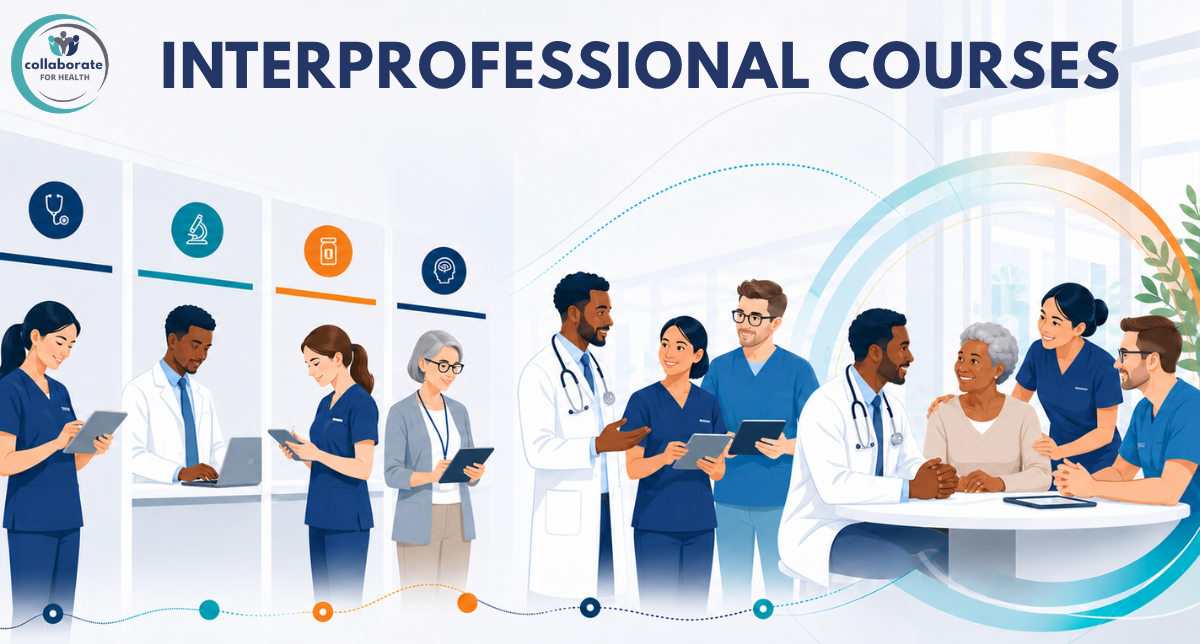
Start with the type of team you are building.
Understanding the differences among multidisciplinary, interdisciplinary, and interprofessional teams is an important first step. This free course will help you identify those differences and consider what each team structure makes possible.
My commitment to this work became personal.
Accompanying a close friend and her husband through his health journey allowed me to see healthcare from a different perspective. Through my friend, I learned that good care within individual encounters does not always create coordination across an entire healthcare journey. Her experience strengthened my commitment to understanding how healthcare professionals can work together more intentionally with patients and families.
Fragmentation in healthcare is generally not a people problem or a one-setting problem. Fragmentation is reinforced when we educate health professions separately and organize care across departments, units, and settings without intentionally designing how people will work together. My work focuses on building the knowledge, structures, and processes that support interprofessional collaboration across those boundaries, with patients, clients, and communities as active partners.
Organizations connected to my work















Podcast conversations







Continue the conversation.
Explore research, practical applications, and learning opportunities to help you prepare, design, and sustain interprofessional collaboration.